

The Hamsa Hand Meaning - The Hand of God / Hand of Fatima
In This Article:
- What is the Hamsa Hand?
- Origin of the Hamsa Hand?
- Hamsa Hand Symbology
- Hamsas for Peace in the Middle East
- Hamsa Jewelry for Sale
What is the Hamsa Hand? (Also Spelled Hamesh, Chamsa, Khamsa)
The Hamsa is an ancient Middle Eastern amulet symbolizing the Hand of God. In all faiths it is a protective sign. It brings it's owner happiness, luck, health, and good fortune.
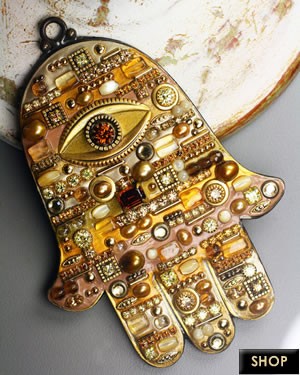
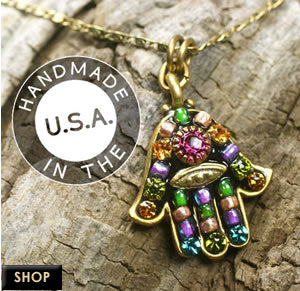
The hamsa hand is known by many names - hamsa, hamsa hand, hamesh, hamesh hand, khamsa, and chamsa. It is also called the Hand of Miriam, named for Moses and Aaron's sister. There are two main styles of a hamsa hand: the most popular is the stylized hamsa hand with two symmetrical thumbs, but there are also hamsa hands that are not symmetrical and shaped like actual hands.
Either hamsa hand can be worn with the fingers pointing up or down, and both are believed to offer its owner happiness, peace, and prosperity, as well as protection from the ayin ha'ra, or the evil eye. The renewed interest in Kabbalah and mystical Judaism has brought the hamsa pendant back into vogue, and many artists are using the image of the hamsa hand in various aspects of their art including hamsa jewelry, paintings, sculptures, wall hamsas, and amulets.

The wearer of the hamsa hand can wear it facing up or down and is thought to give the owner success, harmony, and also protection from the ayin ha’ra, also know as the evil eye. Today, with the rising popularity of Kabbalah and spiritual Judaism, the hamsa hand has become increasingly more widespread. It is also commonly found in a wide variety of varying aspects of art.
Origin of the Hamsa Hand
Although the hamsa hand has been symbolic in Islam and Judaism for centuries, archeological digs in the Middle East provide evidence that the hamsa pre-dates these religions and originated with the Phoenicians and was used as a protective symbol for an ancient Middle Eastern goddess. The hamsa hand has always been associated with a female entity offering protection from evil and misfortune.
Hamsa Hand Symbology
The word "hamsa" or "hamesh" means five. There are five digits on the hamsa hand, but the number five has additional symbolic meaning in the Jewish and Islamic traditions. Five (hamesh in Hebrew) represents the five books of the Torah for Jews. It also symbolizes the fifth letter of the Hebrew alphabet, "Heh", which represents one of God's holy names. It symbolizes the Five Pillars of Islam for Sunnis, and the Five People of the Cloak for Shi'ites.
In the Jewish religion, the Jewish hamsa hand also symbolizes the Hand of God. Many Jews believe the hamsa pendant symbolizes the Hand of Miriam, the sister of Moses and Aaron. In the Islamic faith, the hamsa hand symbolizes The Hand of Fatima, daughter of the Prophet Mohammed.
Many Jews believe that the five fingers of the hamsa hand remind its wearer to use their five senses to praise God. Hamsa hands often contain an eye symbol, which is a powerful talisman against the evil eye. It is most often worn as a hamsa necklace, but can be found as a decorative element in houses, on key chains, on other jewelry items, and is quickly gaining popularity as an amulet in baby carriages. In addition to averting the gaze of the evil eye, it brings its wearer or owner happiness, luck, health, and good fortune.
Hamsas for Peace in the Middle East
In recent years, activists for peace in the Middle East have adopted the hamsa hand. Because hamsa hand symbology is believed to predate most modern religions, those who actively support a peaceful resolution to the ongoing Israeli conflict believe that wearing the hamsa hand highlights not only the similarities of Judaism and Islam, but also the similarities of the origins of the religions.
The hamsa symbol is believed to originate from an ancient Middle Eastern religion, and some Jews and Muslims wear the hamsa as a gesture for hope, peace, and prosperity in Israel and other areas of the Middle East.
Hamsa Jewelry For Sale
Jewish Gift Place is proud to carry a large hamsa pendant selection including a hamsa necklace collection, a wall hamsa collection, hamsa earrings, and hamsa bracelets. They are made from sterling silver, gold, pearls, and semi-precious stones. Hamsa jewelry is a meaningful and wonderful gift for any occassion, whether it's a housewarming gift, a Bat Mitzvah gift, Hanukkah gift, anniversary or birthday gift. Each hamsa pendant sold by Jewish Gift Place comes with a card that includes the Hamsa prayer above, and a brief explanation of the meaning of the Hamsa hand.
 HAMSA BRACELETS |
 HAMSA EARRINGS |
 WALL HAMSAS |
 HAMSA NECKLACES |
 HAMSA KEYCHAINS |
If you enjoyed this article about the hamsa hand, you may also be interested in: